Foundation Repair Cost in Louisiana

Understanding foundation repair cost in Louisiana is one of the first things homeowners want to know — and one of the hardest questions to answer without looking at the actual property. The honest answer is that pricing varies considerably based on the type of foundation, the severity of the damage, the soil conditions beneath the structure, and what method of repair is required.

That said, homeowners deserve a realistic ballpark before they ever pick up the phone. This guide breaks down what foundation repair typically costs in Louisiana, what drives that cost up or down, and how to make sure you’re comparing estimates fairly.


Why Foundation Repair Costs More to Ignore Than to Fix

Before the numbers, the context: foundation problems are progressive. A small amount of settlement today becomes a larger, costlier problem in two years if left unaddressed. Sticking doors and minor cracks are early-stage symptoms. Sloping floors, separating walls, and structural instability are late-stage ones. The gap in repair cost between early and late intervention is significant — often tens of thousands of dollars.

Louisiana’s soil conditions — expansive clay, high water tables, and ongoing subsidence in many areas — make this progression faster here than in most other states. Waiting to see if a problem “stabilizes” rarely works in Southeast Louisiana.


Foundation Repair Cost Louisiana: Typical Price Ranges

These ranges reflect the typical foundation repair costs Louisiana homeowners encounter across Southeast Louisiana.

Minor repairs (crack filling, limited settling): $500 – $2,500 Surface crack repairs, minor concrete patching, or localized settling that requires only a small number of pilings.

Moderate repairs (partial leveling, limited piling installation): $3,000 – $8,000 Homes with one area of noticeable settlement, typically requiring 4–10 pilings and leveling work in a specific section.

Standard whole-home leveling: $8,000 – $20,000 Full foundation leveling for a single-family home, involving pilings installed at all major load points. This is the most common project type Cable Lock handles across Louisiana.

Extensive structural repairs: $20,000 – $40,000+ Severe differential settlement, heavily damaged beam systems, or complex commercial/multi-unit structures requiring significant engineering and labor.

For context, national data from homeowner research platforms puts the average foundation repair cost around $2,500–$3,000. Louisiana projects frequently run higher due to the complexity of local soil conditions, the depth required to reach stable soil, and the need for systems specifically engineered for the Gulf Coast environment.

What Affects Foundation Repair Costs in Louisiana

Type of Foundation

Pier and beam (raised) foundations — the most common type in older Louisiana homes — typically require piling installation, beam replacement or reinforcement, and leveling. Costs vary based on how many pilings are needed and whether wood members need replacement.

Slab foundations — more common in post-1970s construction — may require piering beneath the slab, polyurethane foam injection, or mudjacking to lift settled areas. Slab repairs can be less expensive for minor issues but more complex when the settlement is widespread.

Commercial structures — larger footprints, heavier loads, and more complex engineering requirements push commercial shoring costs above residential ranges.

Number of Pilings Required

Piling count is one of the most direct cost drivers. Each piling installation involves labor, materials, and precise placement. Homes with widespread settlement require more pilings than homes with a single problem area. A qualified inspector should determine piling count based on a structural assessment — not a sales pitch.

Depth to Stable Soil

In Southeast Louisiana, stable soil can be found at relatively shallow depths in some areas and much deeper in others — particularly in communities built on former marshland or near waterways. The deeper the installation required, the more materials and labor are involved. This is a major reason why generic national pricing estimates often understate actual Louisiana costs.

Soil Conditions and Water Table

Clay-heavy soils expand when wet and contract when dry, creating cyclical movement that stresses foundations year-round. Properties with chronic drainage issues, standing water, or very high water tables may require additional work to stabilize soil conditions before or alongside foundation repair.

Access and Site Conditions

Tight crawl spaces, landscaping, fencing, or structures that limit equipment access can add time and cost to a project. So can historic properties where preservation of existing materials is required.

Whether Repairs Include a Warranty

A warranty is not just a piece of paper — it’s a direct reflection of how confident the company is in their work. Cable Lock’s repairs come with a transferable lifetime warranty, meaning coverage moves with the property if the home is sold. Warranty-backed repairs may carry a higher upfront price than bare-bones competitors, but they protect the investment for the life of the structure — and can be a meaningful selling point when the home goes to market.


Pier and Beam vs. Slab: Which Costs More to Repair?

There’s no universal answer, but here’s a general breakdown:

Pier and beam repairs are often more straightforward in Louisiana because the foundation is accessible. Inspectors can physically get beneath the home to evaluate beam condition, moisture levels, and piling status. Repairs are targeted and the system is well-understood. That said, if beams need full replacement, costs increase substantially.

Slab repairs can be less invasive for minor settlement — foam injection under a slab is fast and relatively affordable. But widespread slab cracking or significant settlement under a large concrete pour requires more extensive intervention and can become expensive quickly.


Red Flags When Getting Foundation Repair Estimates

Louisiana homeowners are in a high-demand market for foundation services. That creates room for low-quality contractors and misleading pricing. Here’s what to watch for:

Unusually low bids. A quote that’s dramatically below others often reflects fewer pilings than the job actually requires, cheaper materials, or a contractor who will cut corners once the contract is signed.

No site visit before quoting. Any legitimate estimate requires an in-person inspection. A price quoted over the phone without seeing the property is not a real estimate.

No warranty or a very short one. A one-year warranty on foundation work is essentially no protection. Look for transferable warranties that cover the repair indefinitely.

Vague scope of work. The estimate should specify the number of pilings, placement locations, materials used, and what work is and isn’t included. Vague language leaves homeowners exposed.

High-pressure closing tactics. “This price is only good today” is a warning sign, not a sales technique you should respond to.


Does Homeowners Insurance Cover Foundation Repair in Louisiana?

Generally, no — at least not for the most common causes. Standard homeowners insurance policies typically exclude damage caused by soil settlement, expansive soil, flooding, and normal wear over time. These are the primary drivers of foundation problems in Louisiana.

Coverage may apply in limited cases — for example, if a sudden, covered event (like a burst pipe or covered storm damage) directly caused a foundation issue. But routine settlement, moisture-related deterioration, and long-term subsidence are almost universally excluded.

Flood insurance through the National Flood Insurance Program is a separate policy and may cover foundation damage caused by a declared flood event, though the terms vary. Homeowners in flood-prone areas should review their specific policy language and consult with their agent.

The key takeaway: don’t assume insurance will cover it, and don’t delay repairs waiting on a claim that may not materialize.


Does Foundation Repair Add Value to a Home?

Yes — in two important ways. First, correcting foundation problems directly protects the structural value of the home and prevents the kind of cascading damage (wall cracks, roof misalignment, plumbing stress) that foundation movement causes over time. Second, a documented repair with a transferable lifetime warranty can actually be a selling point rather than a liability. Buyers who see a properly repaired foundation with warranty paperwork in hand have more confidence than buyers who see unaddressed issues with unknown severity.

Cable Lock’s warranty is transferable, which means it stays with the property — something that can be disclosed to prospective buyers as evidence that the foundation has been professionally addressed and is covered for the life of the structure.


How to Get an Accurate Foundation Repair Cost Estimate in Louisiana

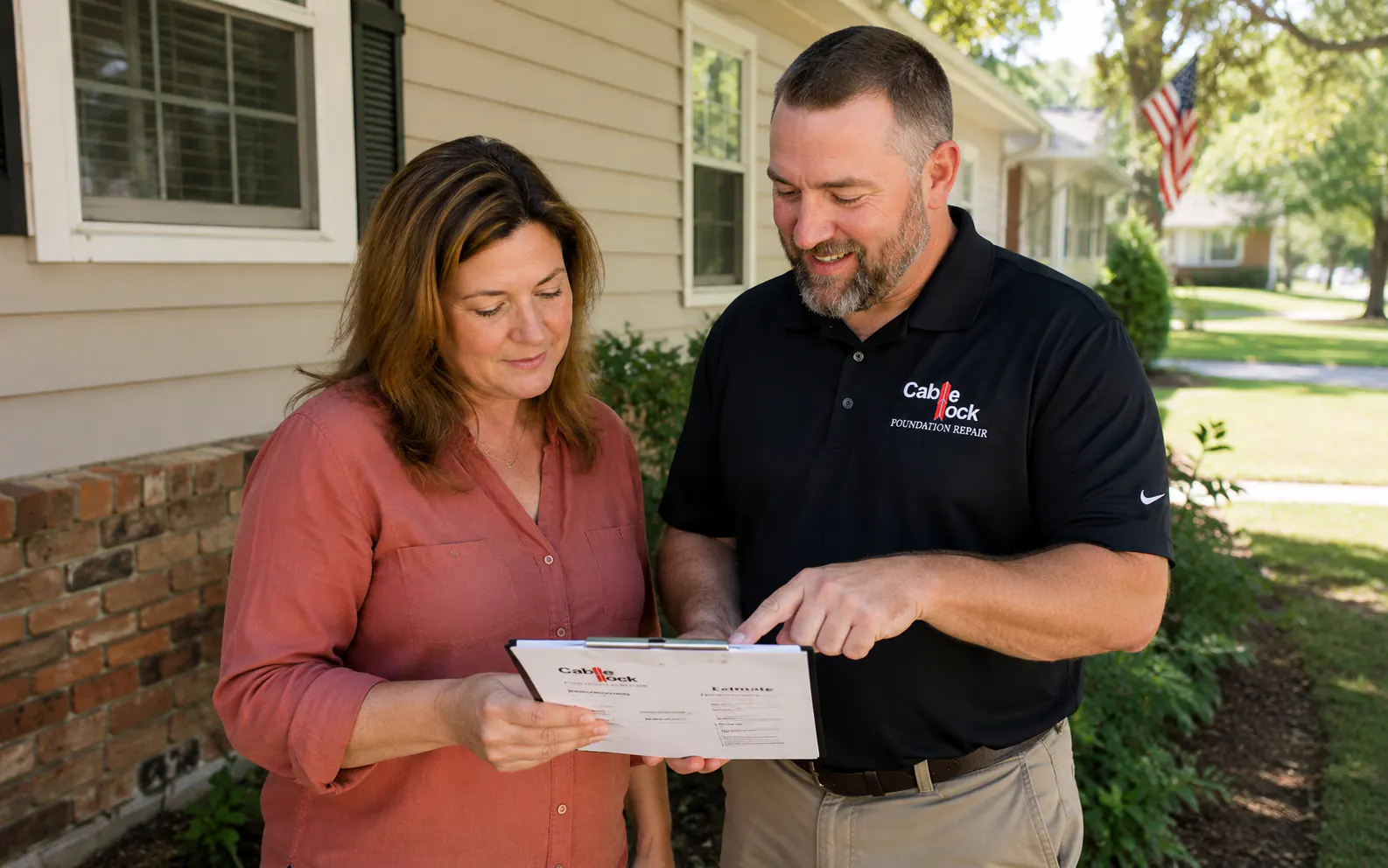
The only way to get a reliable foundation repair cost in Louisiana is a professional on-site inspection. Cable Lock offers free estimates across our full service area in Southeast and South Central Louisiana — including New Orleans, Baton Rouge, Metairie, Covington, Slidell, Mandeville, Kenner, Houma, Thibodaux, Laplace, and surrounding communities.

Our inspection process evaluates the type of foundation, the extent of movement, soil conditions, access requirements, and the specific repair method needed. From there we provide a written estimate with a clear scope of work — no vague language, no pressure.

If you’re seeing uneven floors, sticking doors, wall cracks, or any of the other early warning signs of foundation problems, the right time to get it looked at is now — before the problem grows and the cost of repair grows with it.

Request your free estimate →


Cable Lock Foundation Repair has served Louisiana homeowners and businesses since 1997. Our patented Cable Lock piling system is specifically engineered for Louisiana’s challenging soil conditions and is backed by a transferable lifetime warranty. We serve New Orleans, Baton Rouge, Metairie, Covington, Slidell, Mandeville, Kenner, Houma, Thibodaux, Laplace, Donaldsonville, Morgan City, Port Allen, and surrounding areas.

Share on: