
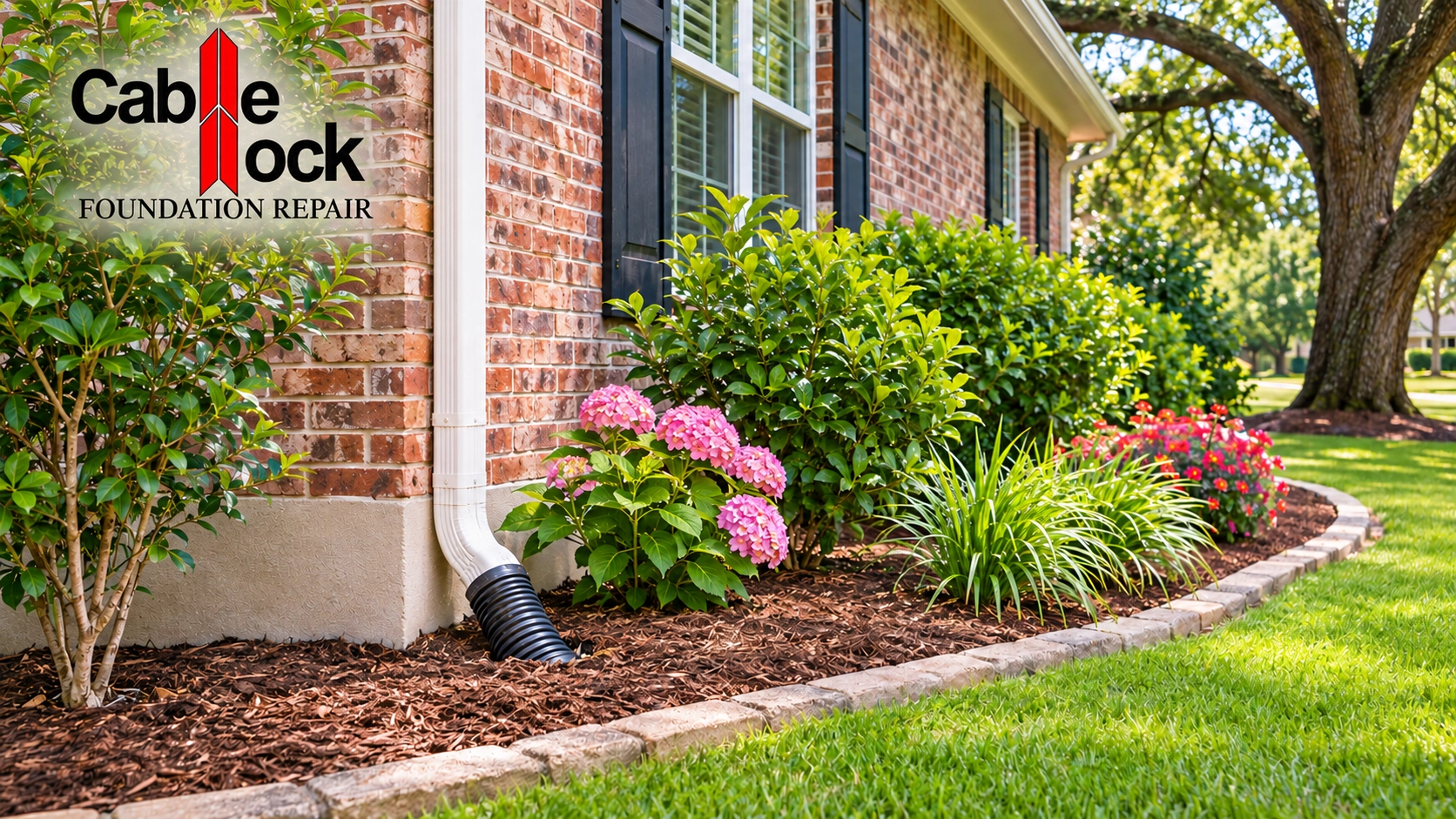
Can Landscaping Damage Your Foundation? 7 Mistakes Louisiana Homeowners Should Avoid
Cable Lock Foundation Repair | Louisiana Homeowner Guide | November 2026
Can Landscaping Damage Your Foundation? 7 Mistakes Louisiana Homeowners Should Avoid
Your flower beds may look beautiful. However, could your landscaping be putting your foundation at risk?
Landscaping foundation damage in Louisiana can develop when poor drainage, tree roots, irrigation, and soil moisture changes affect the ground supporting a home. Fortunately, several simple landscaping improvements may help reduce preventable problems.
Quick Answer: Can Landscaping Cause Foundation Problems?
Yes. Poor grading, trapped rainwater, oversized plants, excessive irrigation, and changes in soil moisture can contribute to foundation problems. However, landscaping alone does not prove that foundation repairs are needed. Soil conditions, drainage, construction, and structural movement must also be evaluated.
Across New Orleans, Metairie, Covington, Mandeville, Slidell, Baton Rouge, and surrounding Louisiana communities, homeowners spend plenty of time improving their yards. Yet landscaping should do more than improve curb appeal. It should also work with the drainage and soil conditions around the home.
In fact, the LSU AgCenter published new guidance on November 6, 2026, about evaluating foundation plantings. Its recommendations include proper planting distances, safe mulch placement, and protecting areas near slabs and piers.
Here are seven common mistakes, practical DIY tips, and warning signs worth watching.
LANDSCAPING MISTAKE 01
Planting Large Shrubs Too Close to Your Foundation
Small shrubs can become surprisingly large. Over time, dense growth may block access to walls, hide drainage problems, and create unwanted moisture conditions near the home.
According to LSU AgCenter, new trees and shrubs should be planted at least three feet away from structures. Larger varieties may need even more room.
DIY TIP: Check each plant’s mature size before planting. Trim overgrown shrubs to maintain access. If roots or large branches must be removed, consult a qualified landscaping or tree professional first.
LANDSCAPING MISTAKE 02
Building Flower Beds That Trap Rainwater
Raised flower beds and decorative edging can make a yard look polished. Unfortunately, some borders also prevent rainwater from escaping.
When water collects beside a slab or pier-and-beam foundation, it may change nearby soil conditions. Repeated saturation can also contribute to erosion or moisture problems, depending on the property.
Therefore, landscape drainage deserves attention before adding more plants or soil.
DIY TIP: Watch your flower beds during rainfall. Look for standing water, blocked outlets, and runoff moving toward the house. Remove leaves and debris from existing surface drainage paths.
For larger drainage changes, speak with a qualified professional before digging near your foundation.
Seeing Water Collect Near Your Foundation?
Recurring water problems and visible soil movement deserve attention. Cable Lock can help evaluate foundation concerns.
LANDSCAPING MISTAKE 03
Piling Mulch Directly Against the House
Mulch helps suppress weeds, protect roots, and retain moisture. However, excessive mulch against a building can conceal pest activity and contribute to unwanted moisture conditions.
LSU AgCenter recommends keeping mulch at least one foot away from structures. It also cautions homeowners not to dig within one foot of slabs or piers because doing so may disturb termite treatment barriers.
DIY TIP: Pull mulch back from the house. Keep siding clearances and inspection areas visible. Follow your pest-control professional’s recommendations for termite protection.
LANDSCAPING MISTAKE 04
Ignoring Tree Roots Near Your Foundation
Louisiana’s mature oak trees provide shade and character. However, large root systems can influence soil moisture near a home.
In some moisture-sensitive soils, changing water conditions may contribute to uneven support. Still, roots are not automatically responsible for every crack or foundation problem.
Instead, the tree, soil, drainage, and structure should be evaluated together.
DIY TIP: Look for changes in nearby paving, soil, and foundation symptoms. Never cut major tree roots or excavate beside mature trees without qualified guidance.
Worried About Roots Near Your Foundation?
Learn how root barriers may help manage certain root-related soil concerns around Louisiana homes.
LANDSCAPING MISTAKE 05
Overwatering One Side of Your House
Automatic irrigation systems can create uneven soil moisture. For example, one flower bed might receive frequent watering while another side of the home remains relatively dry.
Some Louisiana clay soils expand when wet and shrink when dry. As a result, uneven moisture changes may contribute to differential foundation movement.
However, not every Louisiana property has expansive clay. Soil conditions vary from one location to another.
DIY TIP: Check sprinklers for leaks, overspray, and poorly directed water. Follow appropriate irrigation recommendations for your plants rather than attempting to correct foundation settlement by soaking the soil.
Related Reading:
How Louisiana Clay Soil Affects Foundation Support →
LANDSCAPING MISTAKE 06
Adding Heavy Landscaping Features Without Planning
Retaining walls, large planters, masonry features, and outdoor kitchens can transform a backyard. However, they may also change loads, soil conditions, or drainage patterns.
For example, poorly planned construction can redirect rainfall toward the home. Excavation may also disturb soil near existing supports.
DIY TIP: Before building, review runoff patterns, underground utilities, and distance from the foundation. Consult qualified professionals for retaining structures, significant excavation, or heavy installations.
LANDSCAPING MISTAKE 07
Covering Up Foundation Warning Signs
Fresh mulch and decorative stone can improve curb appeal. However, they should never conceal active settlement, soil washout, damaged supports, or growing cracks.
Watch for sticking doors, uneven flooring, recurring wall gaps, and visible movement around the home.
One symptom alone does not establish foundation failure. However, several related changes may indicate that a professional evaluation is appropriate.
DIY TIP: Photograph visible cracks, gaps, and soil conditions before making landscaping changes. Record the date and repeat photos from the same angle to document changes.
Learn More:
Foundation Repair Warning Signs and Solutions in Louisiana →
WEEKEND HOMEOWNER CHECKLIST
Your 20-Minute DIY Landscaping and Foundation Check
You do not need expensive equipment to make a few useful observations. Choose a dry day and walk around your home.
☐ Check whether large shrubs block foundation access.
☐ Look for mulch or soil piled against exterior walls.
☐ Check visible gutters and downspout outlets.
☐ Inspect sprinklers for leaks or overspray.
☐ Look for visible erosion or soil washout.
☐ Photograph any cracks, gaps, or uneven areas.
☐ Write down when any changes first appeared.
Important: Do not enter unsafe crawl spaces, excavate beneath the foundation, cut structural supports, or attempt to lift or level a building yourself.
Why Landscaping and Foundation Care Matter in Louisiana
Louisiana homes face different soil and water conditions depending on their location. Therefore, landscaping decisions that work well for one property may not be suitable for another.
In New Orleans and Metairie, drainage and raised-home moisture concerns may be especially important. Meanwhile, homeowners in Covington, Mandeville, and Slidell may need to evaluate tree coverage, soil conditions, and changing drainage around their properties.
Likewise, homes in Baton Rouge, Kenner, Houma, Lafayette, and nearby communities require recommendations that fit their individual site conditions.
Whether your home has a slab or pier-and-beam foundation, the first step is understanding what is happening beneath and around the structure.
Louisiana Expert Resource: LSU AgCenter
In its November 6, 2026, article, LSU AgCenter recommends evaluating foundation plants and selecting varieties based on their mature size. The guidance also addresses mulch, planting distances, and termite treatment barriers.
When Landscaping Maintenance Is Not Enough
Landscaping maintenance can help address some environmental concerns. However, it cannot reverse every structural problem.
When a home has experienced foundation movement, a qualified inspection can help determine whether monitoring, drainage improvements, structural stabilization, or another repair approach is appropriate.
Cable Lock Foundation Repair provides property-specific evaluations and uses its patented Cable Lock™ piling system when appropriate for the recommended repair.
Want to understand the process?
See How the Cable Lock Foundation Repair System Works →
MORE FROM CABLE LOCK
Keep Exploring Foundation Protection
Helpful resources for protecting your Louisiana home.
01 / SERVICES
Foundation Repair
Learn about common warning signs and foundation stabilization options.
02 / PREVENTION
Root Barrier Services
Discover how professionally planned root barriers may help protect foundation soils.
03 / HOMEOWNER GUIDE
Louisiana Clay Soil
Understand how moisture changes can affect foundation support.
04 / OUR PROCESS
The Cable Lock System
Learn about Cable Lock’s patented piling system and repair process.
FREQUENTLY ASKED QUESTIONS
Landscaping and Foundation Damage FAQs
TRUSTED LOUISIANA FOUNDATION REPAIR
Beautiful Landscaping Shouldn’t Come at the Expense of Your Foundation.
Concerned about cracks, uneven floors, drainage, or possible foundation movement? Cable Lock Foundation Repair can help you understand your options.
New Orleans | Metairie | Covington | Mandeville | Slidell | Baton Rouge | Southeast Louisiana
Educational information only. Every property has different soil, drainage, and structural conditions. Professional guidance is recommended for excavation, tree-root cutting, structural repairs, and significant drainage changes.